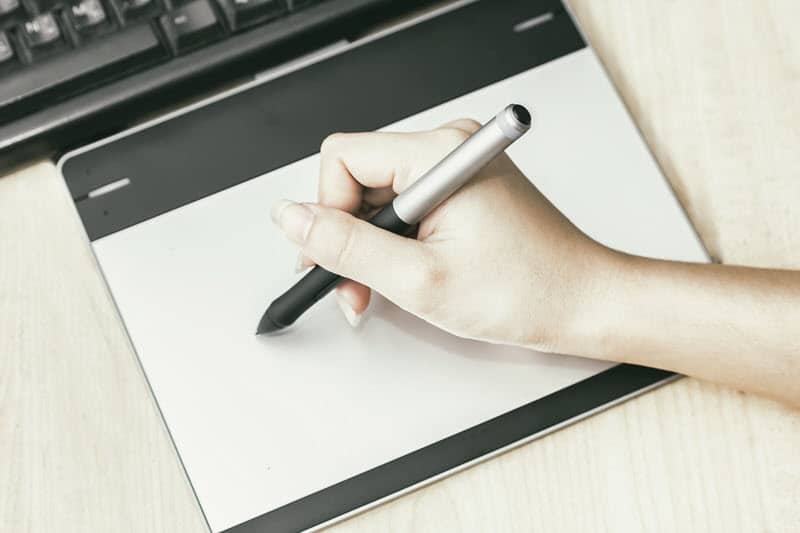
“Signing on the dotted line.” It wasn’t all that long ago that phrase meant signing pen-on-paper. Increasingly these days it can also mean signing on-screen with a stylus—or even with your finger tip!—or by using your computer and keyboard.
So why have many businesses moved to using electronic signatures? What are the advantages over using pen-on-paper for signatures on agreements?
In a word, efficiency. Electronic signatures provide efficiency gains at every point of the legal document process: from distribution, to storage, security and retrieval.
Why are businesses now finding the use of paper-based contracts and legal documents so inefficient?
First, paper agreements have to be mailed or couriered for signature, or be signed in person. This is a waste of time and resources for all parties due to the postage/delivery or travel involved. More importantly, it causes delays. Slowing things down is the last thing you want when your prospect or customer is about to sign a contract with you. You want your business processes to happen with velocity. Paper slows things down.
And that’s when everything goes to plan. If there’s a mistake, error or adjustment to be made, the delays get worse: the document has to be edited, re-printed and re-checked before it’s ratified and re-sent. More delays. More work and wasted resources for you, your employees and the other signatories.
And the costs of using paper for your legal documents doesn’t stop there.
You also need to hide the files away from prying eyes and protect them from flames, flood and other dangers. Sure, you need to do that with your electronic records too, but off-site storage is a cinch with cloud-based and remote servers. To safeguard paper documents against potential destruction requires still more time and expense in creating and storing backups.
However, just storing the paper documents securely and making copies of them isn’t the end of the inefficiency: Next comes the issue of retrieval.
You can’t keyword search paper. So if a dispute or uncertainty arises in the future, you need access to the documents. This can mean you either waste a great deal of time searching for documents—we know of cases where days have been spent trawling through paper archives, looking for important documents—or you set up and use a document archival system to organise your files beforehand.
All of these actions come with costs.
Primarily time, money and opportunity costs. Everyone involved—you, your employers, customers, prospects and suppliers—all have more valuable things they could be doing.
The good news is that it doesn’t have to be this way anymore.
Introducing electronic signatures
Electronic signature tools allow documents to be signed online, eliminating or reducing these paper-related inefficiencies. An added benefit of using these paperless tools for document signing is that they also come with other advantages too, beyond the efficiencies.
But what about the legality of electronic signatures?
To set the record straight, electronic signatures are legal in Australia, Canada, China, the U.S., and Europe, along with many other countries. This has been the case for more than a decade now. Because e-signatures are legally equivalent to paper-based signatures, it’s no surprise businesses are increasingly making the switch to digital signatures.
5 good reasons to use electronic signatures in your business
1. Lightning fast turnaround — no traveling, no meeting.
Links to documents containing legal agreements can be sent via email without meeting in person. No more checking schedules and organising a time to meet—not to mention travelling and physically meeting—just to sign the documents. No more sending contracts to be ratified and returned again via snail mail.
This means a document can be sent and returned at a time convenient to both parties from the moment it’s ready.
In addition to the time and monetary costs of meeting, you can also bring clients and suppliers on board sooner. This eliminates the possibility that they change their mind before entering into a formal agreement.
2. Your documents are legal, encrypted and securely stored.
Electronic documents are actually superior to paper in relation to security. Digitally signed documents are embedded with the details of those who signed them (typically including IP address, time, date, email address and geographic location). Electronic signatures can also prevent tampering or unlawful modification. This makes them not just court-admissible but highly effective legal documents with a comprehensive audit trail.
You don’t get that with paper.
“But what about hackers?” you ask. “Online storage and security seems like I’m just asking for trouble.” Well electronic signatures also beat paper on those grounds too. Even if a hacker managed to get past the high security on the servers where your documents are stored, they’re encrypted with some of the most secure technology available. These encrypted versions are unreadable (and therefore useless), to anyone without a supercomputer and a substantial amount of time at their disposal. Only you as the document creator and parties you share it with (those you sent the document link to), can access the file. Nice.
3. Errors can be easily corrected.
Think about what happens when there’s an error or revision to be made with a paper-based document. It needs to be modified, reprinted, distributed to each party, checked again for changes, signed and returned. Compare that to simply marking an adjustment as approved in the digital document, or uploading an updated and corrected version to be checked and signed.
Imagine the time and money you can save over a month, year or several years when document changes can be implemented and distributed to relevant parties in seconds.
4. It will save you time and money.
There are costs to using electronic signature services. However, unless you are party to just a small handful of contracts per year, you will spend far more resources on coordinating meetings, traveling, storage, security and retrieval processes than a subscription to an electronic signature service.
Not to mention you’ll stop losing to competitors who can close deals in minutes rather than days.
5. You can access your documents on demand.
While your documents are well protected and made exceptionally difficult for hackers to get to, they are available and accessible to you and other signatories.
This means if you need to confirm an agreement, double-check terms or produce them for a court, you can do so simply by logging in. No messing around with filing systems required.
“But what about the risks?”
No matter which method you choose there is always some potential danger that you cannot be one hundred percent protected against. Electronic signatures are securely stored and encrypted. Although they are well protected it is possible that security breaches can occur.
But compare that with the risks of traditional storage? There’s theft, fire, water and even absent minded misplacement to contend with.
Digital is not perfect. But it is safer than traditional methods.
If you’re sold on the idea of using electronic signatures, the next logical question to address is…
Which electronic signature tool should you choose?
Popular choices for electronic signature tools include:
If you’re into comparing the benefits and features of particular apps, evaluate those four to find the one that best suits your business.
If that’s not your thing and you want a shortcut to making your decision, consider the following:
- If ‘rock-solid’ security and protection is your highest need, go with DocuSign. While each of the apps listed above takes security seriously, none goes to the extreme lengths DocuSign does to keep your information safe and secure.
- However, if app integration and other features such as sales proposals and quotes are relevant to your business, PandaDoc and Adobe Sign are definitely worth looking into.
No matter which electronic signature app you choose, your signing process will become much more streamlined and your documents better protected than traditional paper methods can offer.
If you’d like some guidance on which electronic signature tool would be the best fit with your existing apps, get in touch and we’ll be happy to explain your best options.